Anti-inflammatory eating for lipedema: a gentler, sustainable approach
More vegetables, olive oil, and fish. Less sugar and processed food. No extreme rules required.
- Researched against current medical guidelines
- Every claim sourced & linked to a named authority
- Independent — we don’t sell surgery
- Not a substitute for your doctor.
An anti-inflammatory, Mediterranean-style diet — rich in vegetables, healthy fats, fish, and whole foods, low in processed food and added sugar — may reduce lipedema pain and swelling and is sustainable for most people. It's a gentler alternative to strict keto.
On this page
What is an anti-inflammatory diet?
An anti-inflammatory diet is a broad eating pattern — not a rigid plan — that emphasizes foods known to calm inflammatory pathways in the body while reducing foods that promote them. For lipedema, the goal is reducing the chronic, low-grade inflammation that drives much of the pain, swelling, and tissue damage associated with the condition.
The Mediterranean diet is the best-researched version of this pattern and serves as a practical template. It is not restrictive in the way keto is — you're not counting carbs to the gram or eliminating entire food groups. The focus is on food quality and pattern over time.
What are the best anti-inflammatory foods for lipedema?
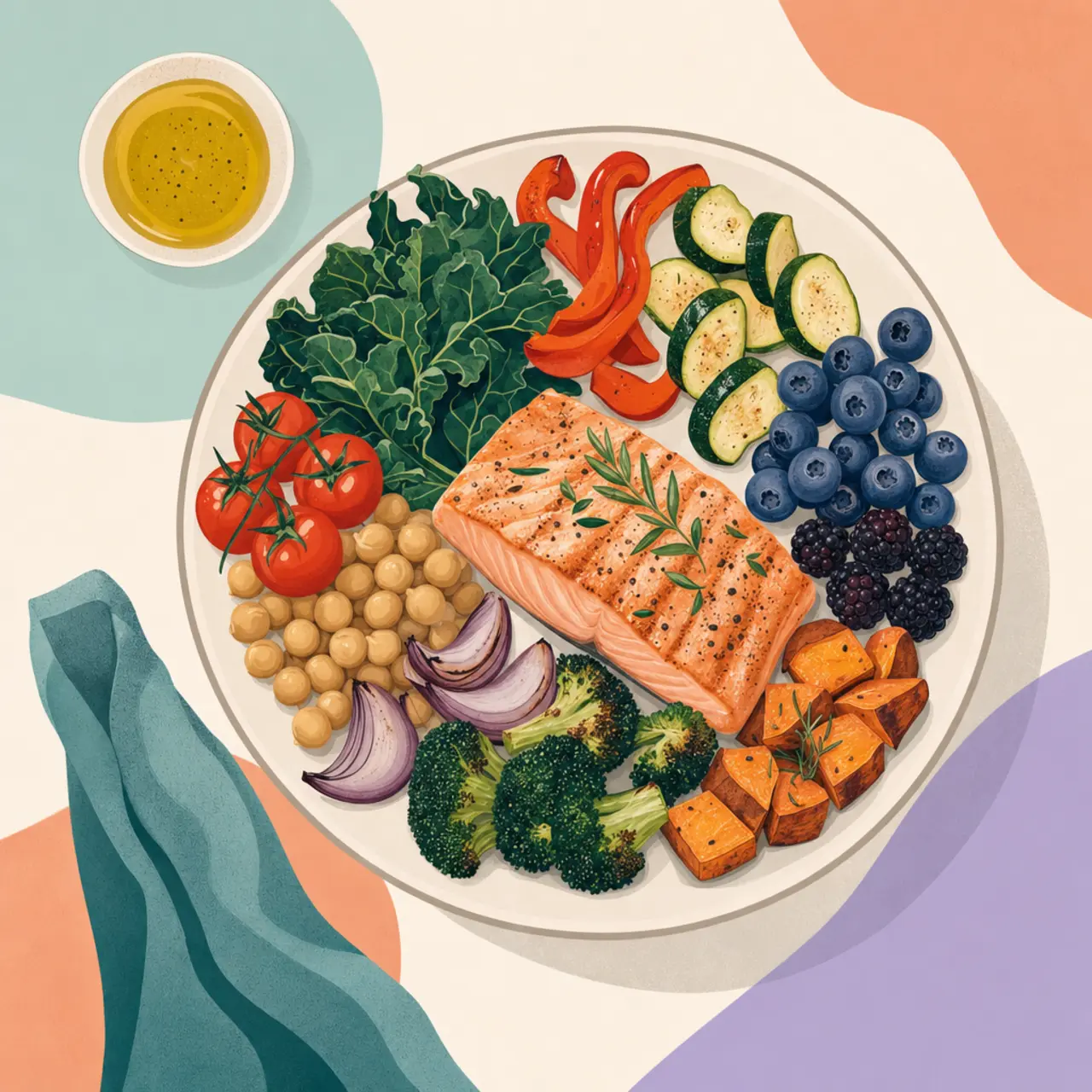
- Oily fish (salmon, sardines, mackerel, anchovies): rich in omega-3 fatty acids that directly reduce inflammatory signaling.
- Extra-virgin olive oil: oleocanthal, its key compound, has ibuprofen-like anti-inflammatory properties in significant amounts.
- Berries and tart cherries: high in anthocyanins — plant pigments with strong anti-inflammatory and antioxidant effects.
- Leafy greens and cruciferous vegetables (spinach, kale, broccoli, Brussels sprouts): dense in micronutrients and anti-inflammatory phytochemicals.
- Turmeric and ginger: active compounds curcumin and gingerol have meaningful anti-inflammatory effects.
- Nuts and seeds (walnuts, flaxseed, chia): omega-3s, magnesium, and fiber that support lymphatic function.
- Legumes (lentils, chickpeas, black beans): fiber-rich, blood-sugar-stabilizing, inexpensive.
- Whole grains in moderation (oats, quinoa, brown rice): better blood sugar response than refined grains.
Why is this approach better for people with a difficult eating history?
Many people with lipedema have spent years — sometimes decades — being pressured to diet. Years of "just eat less" advice from doctors who didn't recognize lipedema, combined with weight that wouldn't budge no matter what, creates fertile ground for disordered eating. Restriction, guilt, bingeing, food anxiety — these are common in this community.
This approach adds, it doesn't ban
Anti-inflammatory eating works best when framed as adding nourishing foods rather than eliminating "bad" ones. That mindset shift matters. When you focus on eating more vegetables, olive oil, and fish — rather than on cutting carbs to a precise gram target — you get many of the same anti-inflammatory benefits without the rigid rules that can spiral into restriction.
A HAES (Health At Every Size) aligned or eating-disorder-informed registered dietitian can help you adopt anti-inflammatory principles in a way that works with — rather than against — your history. This approach is specifically recommended for anyone with a past or current eating disorder.
What can I realistically expect?
Consistent anti-inflammatory eating typically produces gradual, cumulative improvement rather than dramatic rapid changes. Most people who stick with it report:
- Reduced daily pain — less burning, aching, and tenderness in the legs.
- Less end-of-day swelling and a feeling of "lightness" in the legs.
- Better energy levels and less brain fog.
- Modest reduction in non-lipedema body weight over months.
- Generally feeling more in control of their health.
Lipedema fat won't respond — and that's expected
Anti-inflammatory eating, like all dietary approaches, will not remove lipedema fat. If your legs don't slim down the way your torso does, that's the biology of lipedema — not a failure of your diet. Weight loss on this plan comes from non-lipedema tissue.
Should I go gluten-free for lipedema?
Gluten-free is not evidence-based for lipedema
There is no clinical evidence that avoiding gluten improves lipedema symptoms in people without celiac disease or confirmed non-celiac gluten sensitivity. If you've been told to go gluten-free for lipedema, that recommendation lacks an evidence base. Focusing on reducing ultra-processed foods and added sugar — which happens to reduce most gluten-containing junk foods anyway — is more substantiated.
How do I start eating anti-inflammatory?
- 1 Replace one meal a week with oily fish (salmon, sardines) with plenty of vegetables and olive oil.
- 2 Swap your cooking oil to extra-virgin olive oil for daily use.
- 3 Add a handful of berries or a side salad with walnuts to a regular meal.
- 4 Reduce sugary drinks — swap for water, herbal tea, or sparkling water.
- 5 Gradually reduce ultra-processed snacks by replacing them with nuts, hummus, or fruit.
Small consistent changes compound. You don't need to overhaul everything at once. Each swap matters.
Sources
- Lipedema Foundation — Diet resources lipedema.org
- Herbst KL et al. — US Standard of Care, Phlebology 2021 journals.sagepub.com